
Emergency Air Duct Cleaning Near Me: What Houston Homeowners Should Do First
If you’re searching “emergency air duct cleaning near me” in Houston, the most critical first step is to shut off your HVAC system completely — running it will spread contamination through every room. Next, identify what triggered the emergency (water, smoke, mold, or animal intrusion) and document everything with photos before touching anything. Only then should you call a contractor, and what you say in that first 30 seconds determines whether they show up with the right equipment or waste a trip. If you’d rather not handle the triage yourself, call Summit Air Duct Cleaning Service Texas at (844) 886-2161 — we’ll walk you through it and dispatch if needed.
Here’s the mistake we see constantly across Houston: homeowners call us in a panic, leave the AC running “to keep air moving,” and by the time we arrive in Memorial or the Heights, whatever was in one duct has been pushed through the entire system. In eight years of running Summit Air Duct Cleaning Service Texas, I’ve learned that the first 30 minutes after discovery matter more than which contractor you eventually hire. This post is your triage protocol.
Why “Emergency” Means Different Things for Different Contaminants
Not every duct emergency gets solved by a duct cleaning contractor. Houston’s humidity and flash-flood geography create four distinct emergency categories, and knowing which one you’re facing saves you time, money, and from making the problem worse.
- Water intrusion (post-Harvey-style flooding, pipe burst, roof leak): Shut HVAC off immediately. Running the system pulls moisture deep into the coil and blower, creating mold conditions within 24–48 hours in Houston’s climate. You likely need a water restoration company first, then duct cleaning after drying is verified.
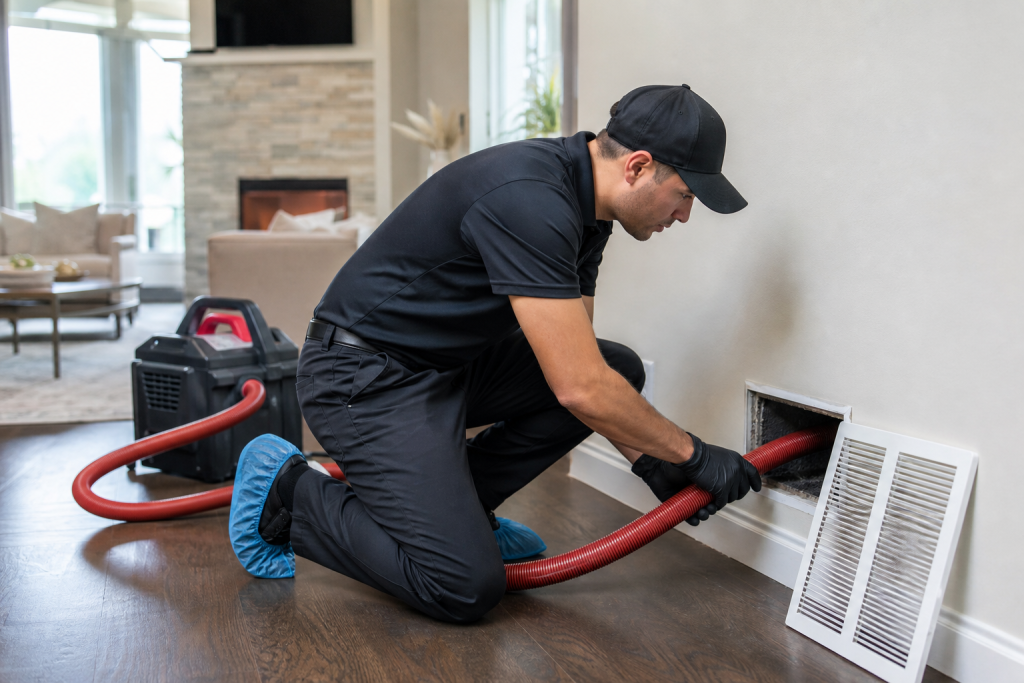
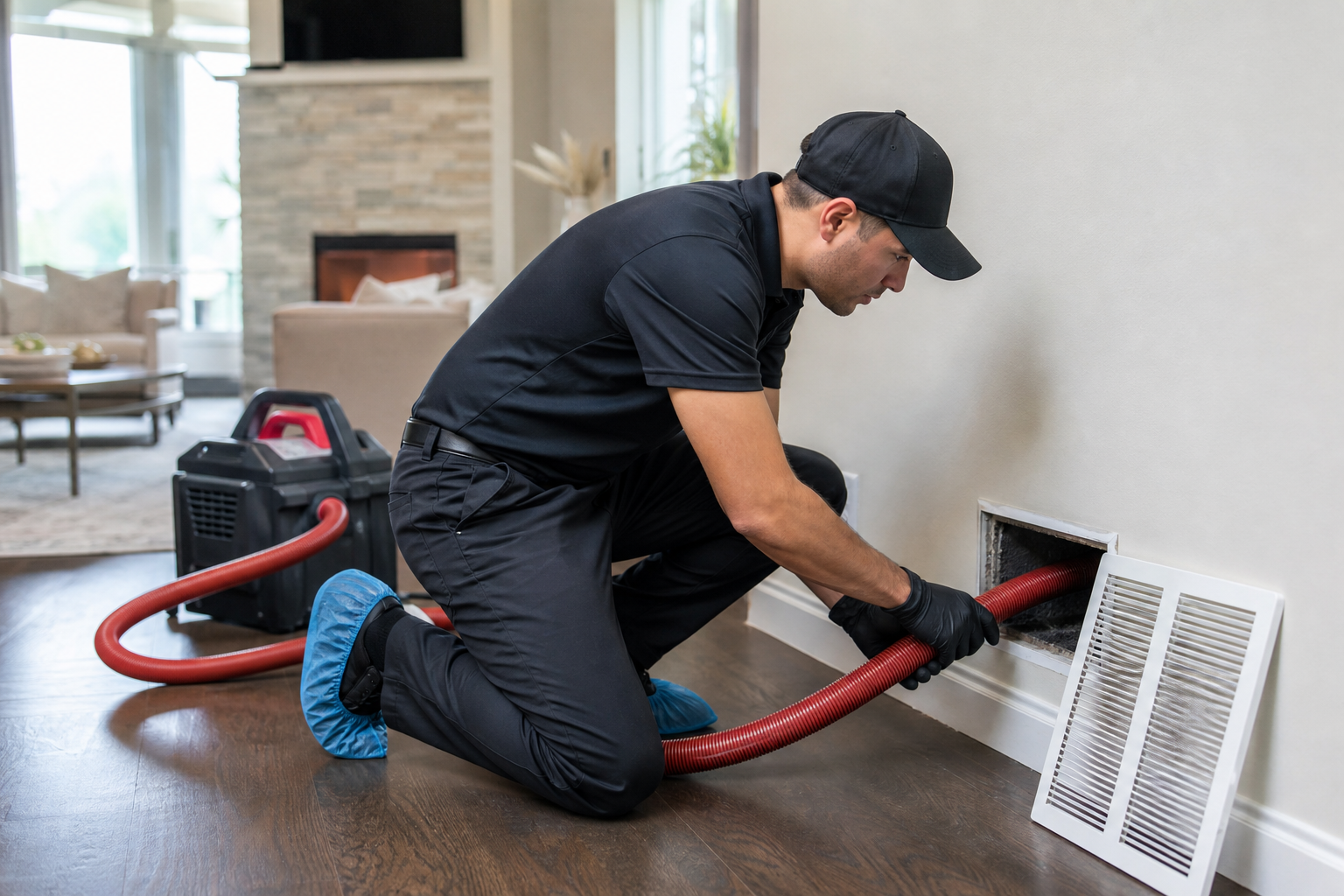
- Smoke and soot (kitchen fire, wildfire drift, electrical fire): Particles are microscopic and acidic. Standard duct cleaning won’t remove odor — you need a contractor with soot-specific agitation tools and odor-neutralizing agents. We use Nikro equipment with HEPA containment for these jobs.
- Dead animal or sewage backup: Biohazard situation. The carcass or contamination must be physically removed, then the duct section sanitized. This is within scope for a specialized duct cleaner with proper PPE and sanitizing protocols.
- Visible mold growth: Here’s where Houston homeowners get tripped up. If mold covers more than 10 square feet in the ductwork, Texas regulations typically require a licensed mold remediation contractor — not just a duct cleaner. We can clean and treat minor surface mold, but we’ll tell you upfront if you need remediation first.
In our experience, about 40% of “emergency duct cleaning” calls we get in Houston actually need a restoration or remediation contractor as the first responder. We always ask the right questions by phone so you don’t pay for a service call that can’t solve your problem.
The 30-Minute Triage Checklist Before You Call Anyone
Every minute counts, but panic moves faster. Here’s the sequence we teach Houston homeowners:
- Shut off the HVAC system at the thermostat and the breaker. Don’t just raise the temperature — full shutdown. If you have a smart thermostat, disable schedules so it doesn’t auto-restart.
- Open windows if outdoor air quality permits. Houston’s pollen counts are brutal in spring, but if you’ve got smoke or sewage odor, ventilation beats recirculation. Use judgment — if it’s August and 95 degrees with ozone warnings, skip this step.
- Identify the source room. Which vent did you notice first? Is the contamination visible at the register, or do you suspect it’s deeper in the trunk line? This tells us whether we need camera inspection or can access directly.
- Photograph everything before touching. Insurance claims require documentation of the original condition. Date-stamped photos of water lines, soot patterns, or mold patches protect your claim.
- Contain the area if possible. Close doors to isolate rooms. If a register is actively dripping or emitting odor, tape a plastic bag over it loosely — don’t seal airtight, as pressure changes can damage ducts.
- Check your HVAC filter. If it’s saturated with water or visibly contaminated, note the brand and size. A clogged filter after a flood event often means the blower housing is compromised too.
Last Tuesday we got a call from a homeowner in Bellaire who’d had a water heater burst in the attic. They did everything right — breaker off, photos taken, contained the hallway — and when Michael Brown arrived with our Rotobrush and Nikro systems, we could start immediately instead of spending an hour assessing. Their insurance adjuster later told them the documentation saved two weeks on the claim.
How to Describe Your Emergency So Contractors Bring the Right Equipment
The difference between a same-day fix and a return visit often comes down to what you say in the first phone call. Here’s what Houston homeowners should communicate:
- “My HVAC has been running since the incident.” This tells us contamination has likely spread to the coil, blower, and return plenum — not just the ducts. We’ll bring HVAC cleaning equipment, not just duct tools.
- “I can see [water/soot/mold/animal] at the [specific room] register.” Specific location helps us estimate access and whether camera inspection is needed first.
- “This started [timeframe] ago.” A mold discovery from three months of slow leak requires different response than active flooding from last night.
- “I’ve already shut off the system and taken photos.” This signals you’re organized, and it tells us we can focus on remediation rather than triage.
- “My insurance company is [name] and I’ve started a claim.” We can document our work to their standards, including before/after photos and detailed scope notes.
What we don’t need: a play-by-play of your entire morning. What we do need: the facts that determine equipment loadout. Summit Air Duct Cleaning Service Texas keeps our Rotobrush, Nikro, and Abatement Technologies systems ready, but we also stock Honeywell and Aprilaire air quality components for replacement if your existing hardware is compromised. The right phone description means we bring everything on the first trip — especially important in Houston’s sprawling metro where a return visit burns half a day in traffic.
What “Same-Day Emergency Service” Actually Means in Duct Cleaning
Let’s be direct about what can and can’t happen in one visit. In eight years, we’ve learned to set honest expectations with Houston homeowners:
| Situation | What’s Realistic Same-Day | What Requires Return Visit or Specialist |
|---|---|---|
| Dead animal in accessible duct | Removal, sanitizing, deodorizing | Duct repair if animal chewed through flex duct |
| Post-flood water in ducts | Assessment, water extraction, initial drying | Full cleaning only after structural drying verified (usually 3–5 days) |
| Smoke odor throughout system | Source removal, initial treatment | Complete odor neutralization often needs 2–3 treatments |
| Visible mold, under 10 sq ft | Cleaning, HEPA vacuuming, antimicrobial treatment | Post-treatment lab clearance if insurance requires |
| Heavy debris/dust blockage | Full mechanical cleaning with brush and vacuum | Duct repair if blockage caused seam separation |
Houston’s heat and humidity compress timelines. A water intrusion that might be manageable in Denver becomes urgent here — mold germinates faster, and running AC in a compromised system spreads problems through every room in minutes, not hours. When we say “emergency response,” we mean we’ll assess, contain, and begin treatment same-day. We don’t promise miracles that compromise your long-term air quality.
Insurance Documentation: Protect Your Claim Before and During Cleaning
Most Houston homeowners don’t realize that how you document duct contamination affects whether insurance covers the cleaning. Here’s what we’ve learned working with adjusters across Harris County:
- Before anyone arrives: Photos of the original condition, your HVAC filter brand/date, and any visible damage to registers or surrounding drywall. Note the weather — Houston’s frequent storms mean adjusters verify whether damage is sudden (covered) or gradual maintenance issue (often not).
- During our work: Summit provides detailed scope documentation including before/after photos, footage of camera inspection, and itemized equipment used. We note specific contaminants found and disposal method. This matters for biohazard situations especially.
- After completion: We provide a written summary of work performed, recommended follow-up (like filter replacement schedule or duct sealing), and any warranty terms. For insurance, this proves the work was necessary and professionally executed.
One thing we never do: inflate scope to match insurance coverage. We’ve lost jobs to contractors who promise to “find enough damage to max your claim.” That’s not how we operate at Summit Air Duct Cleaning Service Texas. Michael Brown reviews every insurance-related job personally, and our 4.9-star average across 775 reviews exists because we document honestly — adjusters remember which contractors they can trust, and that reputation protects our Houston customers long-term.
When to Call a Pro vs. Handle It Yourself
Here’s our honest take: if you can see the contamination, can’t identify the source, or the HVAC has been running since discovery, call a professional. Houston’s climate means delays amplify problems. DIY duct cleaning with a shop vac is fine for routine register dust — it’s dangerous and ineffective for emergencies involving water, smoke, mold, or biohazards. The agitation tools we use (Rotobrush mechanical brushes, Nikro HEPA containment) are built for this job specifically, and improper DIY attempts often damage flex duct or push contamination deeper.
Related services in Houston: If your emergency involves the full HVAC system, not just ducts, see our HVAC Cleaning in Dallas page for scope details. For dryer vent blockages that create fire risk, our Dryer Vent Cleaning in Dallas service addresses those separately.
The Bottom Line
Emergency air duct cleaning in Houston starts with your own two hands — shut off the system, identify the contamination type, document everything, then call someone who knows which equipment the situation actually requires. The triage you perform in the first 30 minutes matters more than which contractor’s truck shows up first. At Summit Air Duct Cleaning Service Texas, we’ve built our reputation on honest assessment, owner-led service, and equipment that matches the job. Eight years focused on one trade means we’ve seen the emergencies that look similar but need completely different responses — and we’ll tell you upfront if you need a restoration specialist before a duct cleaner.
If you’re in Houston and facing a duct emergency, or you’re not sure whether your situation qualifies as one, call (844) 886-2161 for a free estimate. Michael Brown answers directly or returns calls within the hour, and we’ll walk you through whether you need us now, later, or not at all.
Frequently Asked Questions
Most true emergencies get same-day assessment, and many can begin treatment immediately if the situation is contained. Response time depends on equipment needs: a dead animal removal with our Nikro HEPA system takes 2–4 hours, while post-flood work requires drying verification first. Call (844) 886-2161 with your specifics — we’ll give you an honest timeline.
Sudden, accidental damage typically is; gradual maintenance issues typically aren’t. Houston’s frequent storms complicate this — adjusters distinguish between sudden water intrusion and long-term humidity damage. Document everything with date-stamped photos before anyone touches the system, and request detailed scope documentation from your contractor. We provide this standard on every insurance-related job.
No — this is the single most expensive mistake we see. A new filter doesn’t stop contaminated air from circulating through the blower, coil, and supply ducts. In Houston’s climate, running the system also pulls humidity into compromised areas, accelerating mold growth. Shut it off completely at the breaker and wait.
Visible mold covering less than 10 square feet in accessible ductwork can often be addressed by a specialized duct cleaner with proper antimicrobial treatment and HEPA containment. Larger areas, HVAC components with internal mold growth, or situations involving sewage require licensed mold remediation in Texas. We assess honestly and refer out when remediation is the right first step — call (844) 886-2161 for a no-charge evaluation.
Written by Michael Brown, Owner & Lead Technician at Summit Air Duct Cleaning Service Texas, serving Houston since 2018.
Need Air Duct Cleaning Help?
Call Summit Air Duct Cleaning Service Texas — licensed & insured, here with fast after-hours help in Texas.
(844) 886-2161