

Fast, Reliable Air Quality & Sanitizing Across Fort Worth
Air quality sanitizing in Fort Worth typically runs $280–$650 for whole-home treatment and is usually completed in a single visit. We’re Summit Air Duct Cleaning Service Texas, and we make the drive from Houston to Fort Worth because the air quality challenges here are genuinely different from anywhere else in the Metroplex. Michael Brown, our owner and lead technician, has spent eight years specializing in duct and HVAC cleaning — not general repairs, not installation, just this. When you call (844) 886-2161, you’re talking to the person who’ll actually show up at your door in Fort Worth, whether you’re off Camp Bowie Boulevard, near the Stockyards, or out in the growing developments along 820.
Fort Worth’s semi-arid climate and position directly in the path of southwesterly winds off the plains cause homes to accumulate a gritty mix of caliche and red-clay particulate, plus Ashe juniper pollen during Cedar Fever season — a dual contamination load that Dallas homes largely avoid. That red dust on your west-facing registers? It’s not ordinary household dust. It’s iron-oxide clay that’s been blasted through your soffit vents and around your return air pathways for years. Our Air Quality & Sanitizing team treats this as a regional specialty, not an afterthought.
Why Summit Air Duct Cleaning Service Texas Is Fort Worth’s Preferred Air Quality & Sanitizing Company
We’ve earned a 4.9-star average across 775 verified customer reviews — a volume that only comes from showing up consistently and doing the work correctly. Fort Worth homeowners aren’t easily impressed by marketing; they check reviews, they ask neighbors, they want to know who’s actually walking through their door. Michael Brown is. No subcontracted crew, no rotating technician who doesn’t know your system’s history. The owner shows up and does the work.
Our equipment fleet includes Rotobrush and Nikro systems — the same professional-grade tools commercial restoration contractors use, not the consumer-grade shop vacs some competitors bring into Fort Worth homes. Eight years focused on one trade means we’ve seen the specific failure patterns that Fort Worth’s housing stock produces: original 1950s duct board in Polytechnic Heights, flex duct cooked brittle in 150°F attics over Stop Six, the caliche film that coats evaporator coils on homes facing the open plains west of 35W.
We understand Fort Worth’s geography. The drive from our Houston base is worth it because the problems here demand specialized attention. From the post-war ranch homes in 76103 to the newer construction pushing toward 76199, we tailor our sanitizing approach to what’s actually inside your ducts — not a generic protocol copied from a humid Gulf Coast city.
Our Air Quality & Sanitizing Services in Fort Worth
Allergen Reduction
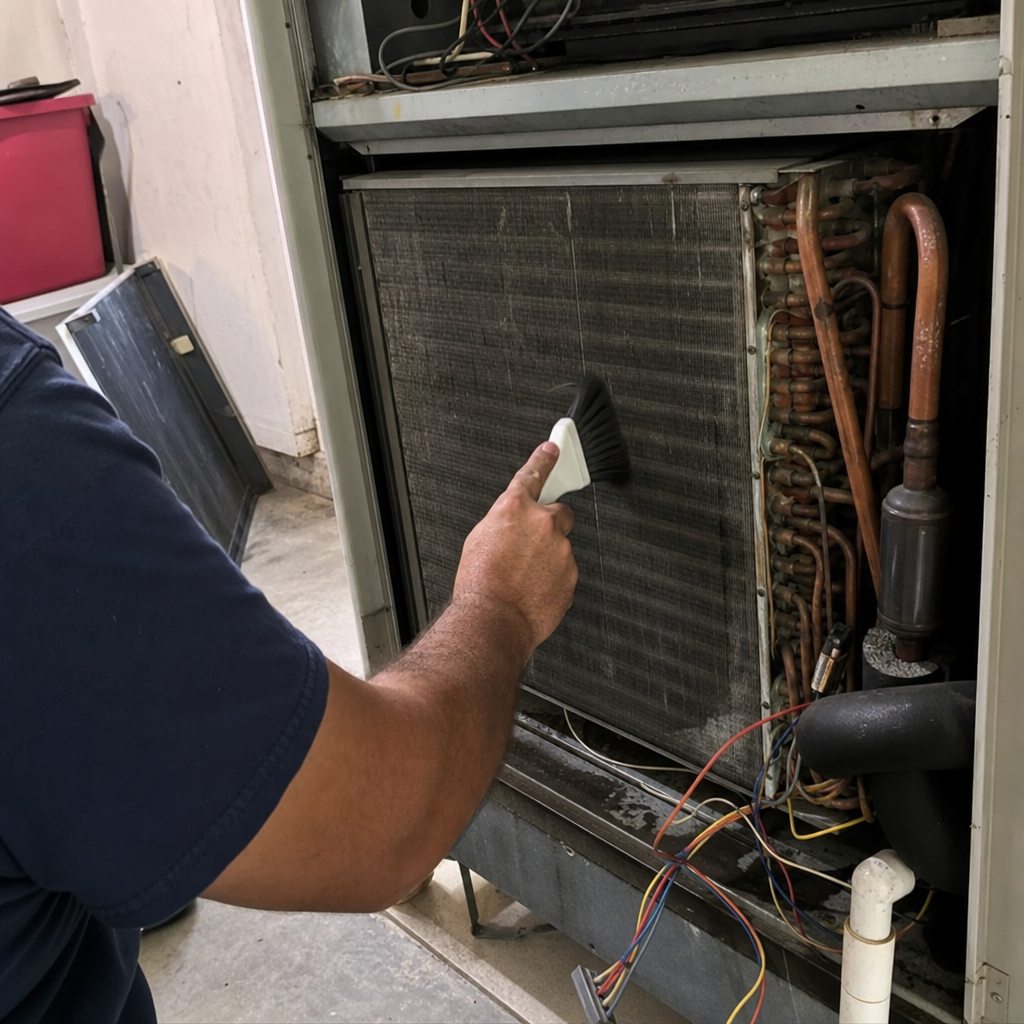
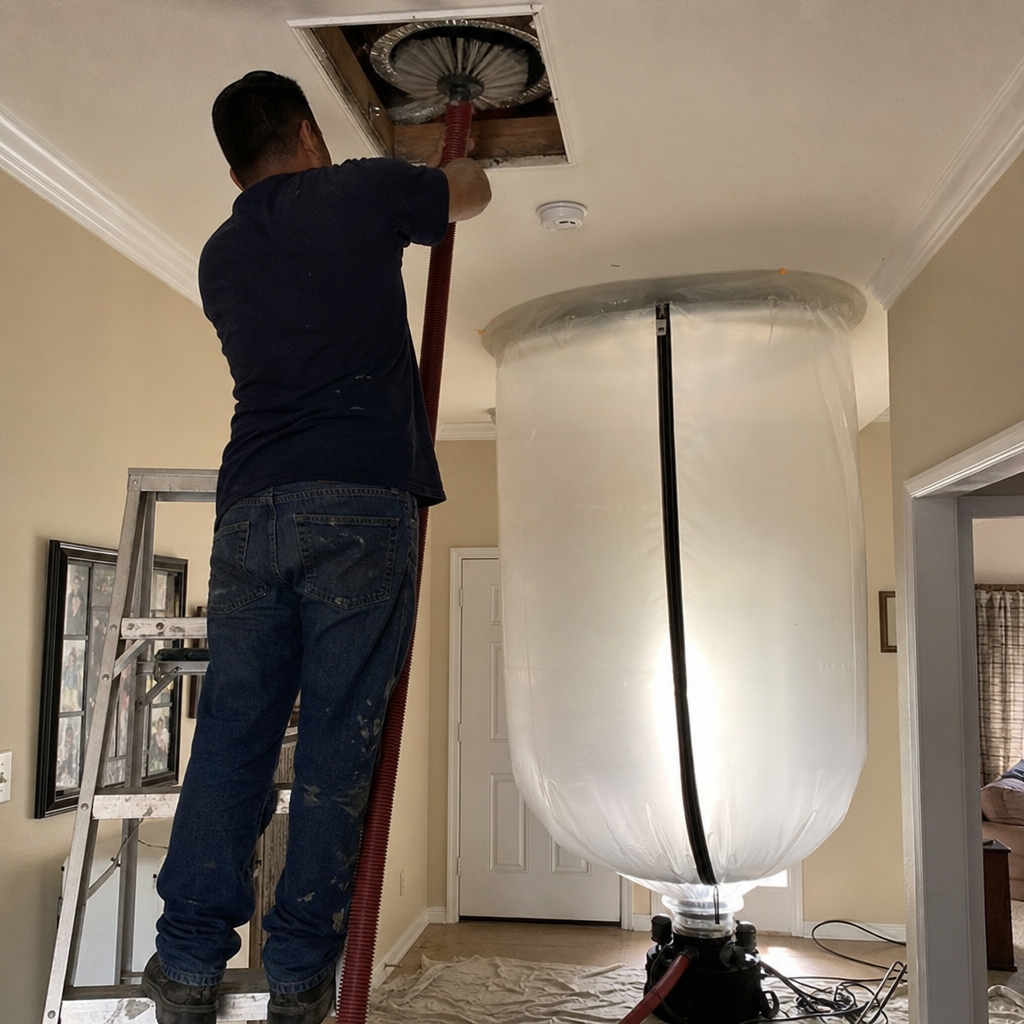
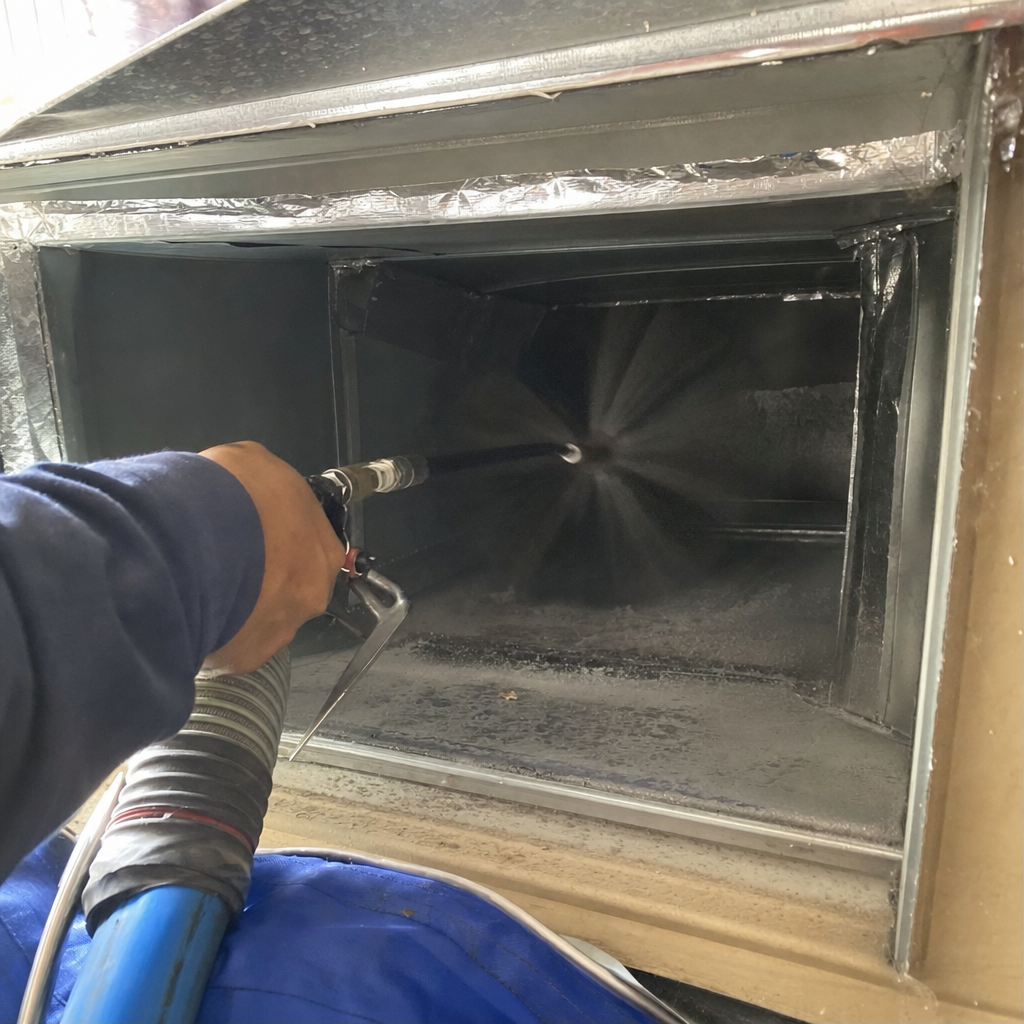
Cedar Fever season in Fort Worth isn’t a minor inconvenience — it’s a measurable health event. From November through February, Ashe juniper pollen counts here rank among the densest in North Texas. The microscopic particles bypass standard pleated filters and embed in duct board, evaporator fins, and blower assemblies, recirculating through your home every time the heat kicks on. Our allergen reduction protocol starts with mechanical agitation using Rotobrush contact cleaning, followed by HEPA-negative-air containment extraction, then a botanical-based sanitizing treatment that neutralizes pollen proteins without leaving residual chemical irritants. For Fort Worth homes with severe sensitivities, we pair this with Aprilaire media filter upgrades sized to your system’s actual airflow capacity — not the one-inch fiberglass inserts that clog in three weeks during peak pollen.
Mold Treatment
Fort Worth’s slab-on-grade construction routes ductwork through unconditioned attics where summer temperatures exceed 150°F. That heat degrades flex duct insulation, creating condensation points at collar separations where mold colonizes — especially on north-facing trunk lines that cool overnight. We’ve treated mold in attics over Ridgmar, in the historic corridors near 76102, and in newer builds where builders used the cheapest flex duct available. Our mold treatment isn’t surface spraying; we remove contaminated insulation, treat the substrate with EPA-registered fungistatic agents, and document moisture sources so the problem doesn’t return. In Fort Worth’s climate, if we don’t fix the thermal bridge or duct separation that caused the mold, we’re wasting your money.
Odor Removal
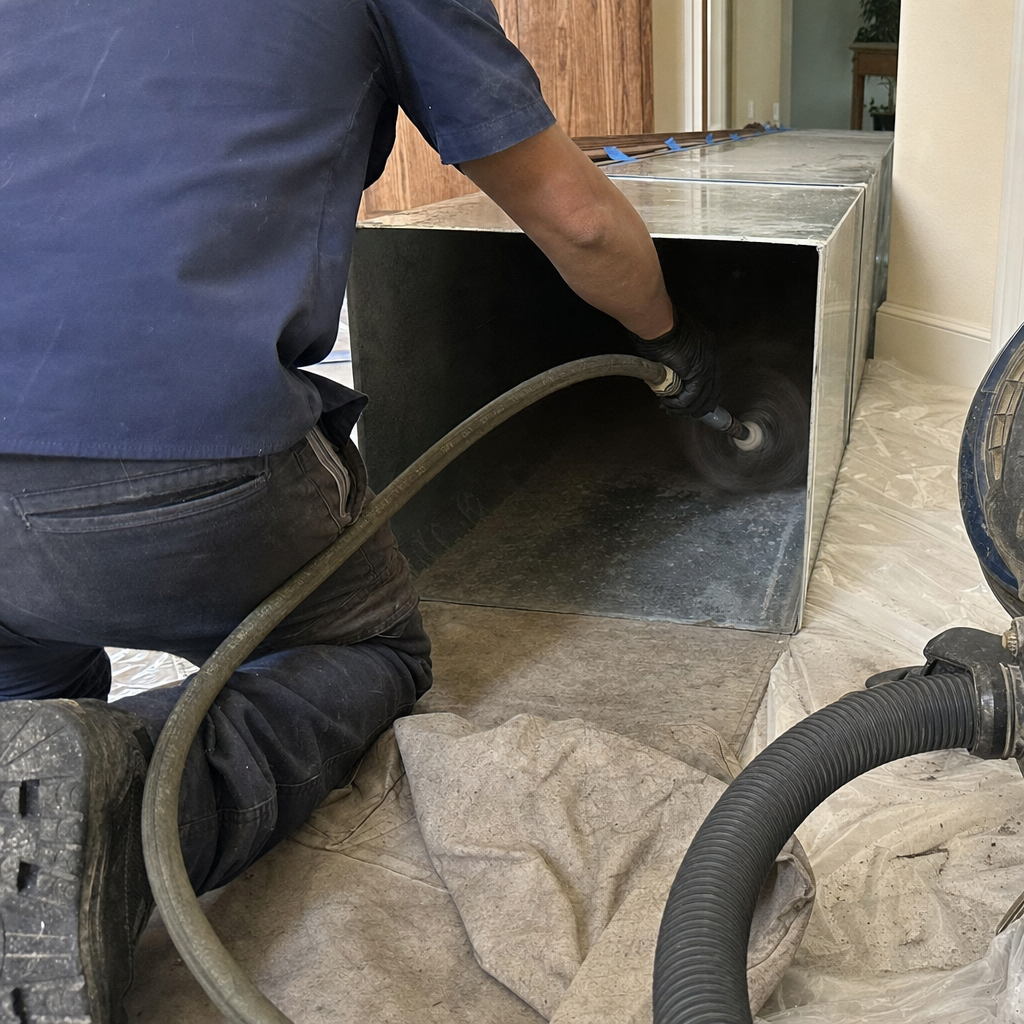
The red-clay and caliche particulate that infiltrates Fort Worth homes carries a distinct mineral odor — sharp, metallic, not like ordinary household dust. Add pet dander, cooking oils that condense in cooler return ducts, and the occasional rodent intrusion in older 76101 housing stock, and you’ve got a smell that candles won’t touch. Our odor removal process targets the source: source extraction of particulate load, then oxidation treatment using commercial-grade hydroxyl generators or targeted vapor-phase application depending on contamination type. Last winter, we sanitized a forced-air system in a Polytechnic Heights bungalow where the duct board was saturated with iron-oxide clay dust from six decades of wind-driven infiltration. After thorough cleaning and UV light installation from Honeywell, the homeowner reported a 70% reduction in their family’s Cedar Fever symptoms during peak pollen weeks.
UV Light Installation
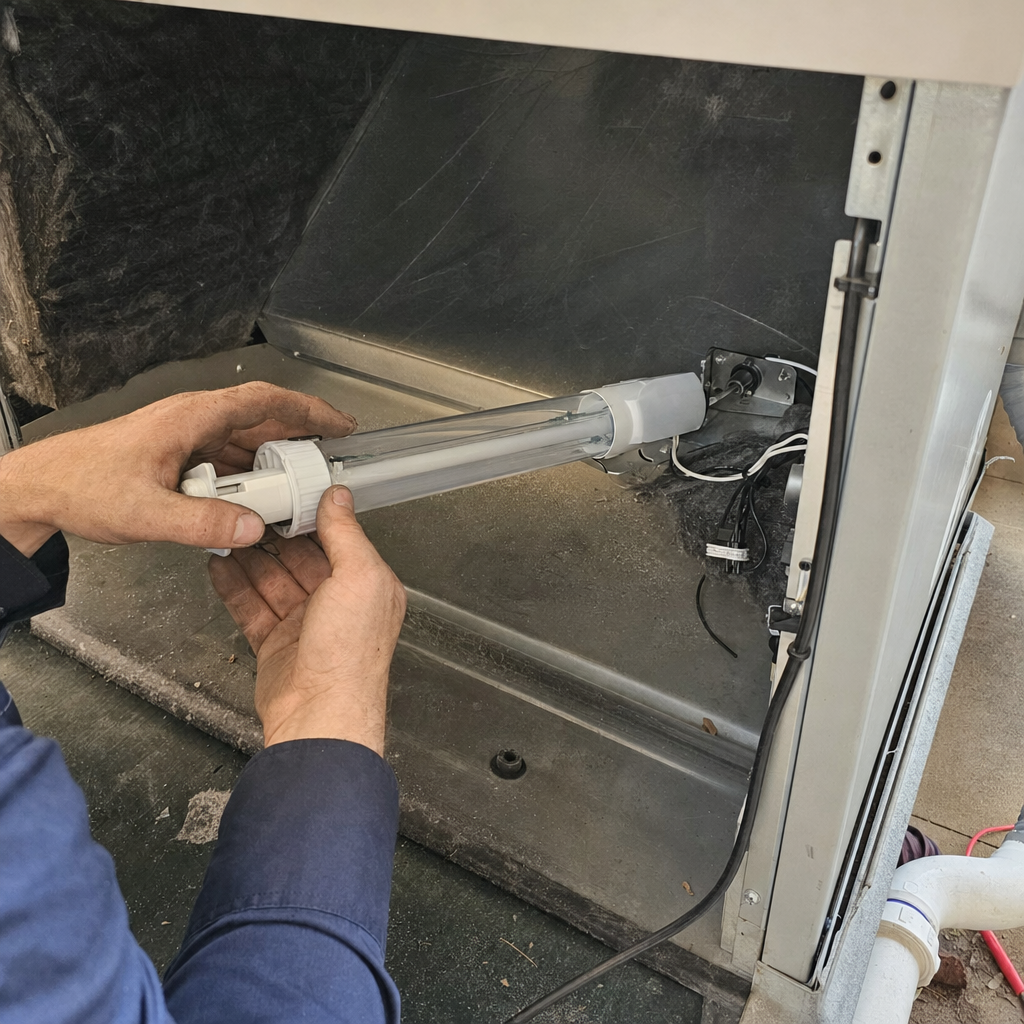
UV-C germicidal lights installed at the evaporator coil and in return plenums destroy mold spores, bacteria, and viral particles that pass through your Fort Worth home’s air handler. We specify Honeywell and Aprilaire UV systems with proper dosage calculations — not the underpowered stick-on units that look impressive but deliver insufficient microwatt-seconds per square centimeter. For Fort Worth’s specific challenges, UV lights are particularly valuable because they prevent the mold regrowth that our 150°F attic summers and rapid temperature swings encourage. We size the lamp intensity to your system’s airflow and coil surface area, and we position it where it’ll actually intercept organisms, not where it’s easy to mount.
What happens when you call
- 1
A real person answersNo phone trees — you reach a local pro.
- 2
You get an upfront price rangeHonest numbers before anyone is dispatched.
- 3
A background-checked tech heads outLicensed & insured, dispatched right away.
- 4
You approve before work beginsNothing starts until you say go.
Trusted Brands We Service in Fort Worth
We stock and install Honeywell, Aprilaire, and Guardsman products on every Fort Worth job — brands with documented performance data, not generic rebadged equipment. Honeywell’s UV systems and electronic air cleaners have proven field reliability in Texas’s high-particulate environment. Aprilaire’s whole-home media cleaners handle the heavier dust loads we see in Fort Worth without the pressure drop that chokes airflow in undersized systems. We carry replacement lamps, filters, and media on our service vehicles, so Fort Worth customers aren’t waiting for Houston-ordered parts. When you’re dealing with Cedar Fever season or a mold concern, “next week” isn’t acceptable. Our equipment is built for this job — not adapted from another trade, not consumer-grade, not close enough.
Common Air Quality & Sanitizing Problems We See in Fort Worth Homes
- Original asbestos-containing mastic on 1950s duct board. In neighborhoods like Polytechnic Heights (76105) and the Stop Six corridor (76104–76105), technicians regularly pull original fiberglass duct board that’s never been serviced. The boards are saturated with Fort Worth’s characteristic iron-oxide clay dust and, in some cases, show asbestos-containing mastic at trunk-line seams. We identify this before any agitation begins and walk homeowners through hazmat protocol options — skipping this check is negligent, and we’ve seen competitors blow contaminated dust through entire homes.
- Heavy red-clay film concentrated on west and northwest duct surfaces. Fort Worth’s prevailing southwesterly winds drive caliche and iron-oxide particulate against the windward side of homes, where it infiltrates soffit vents, window frames, and return air pathways. Standard cleaning that doesn’t address this directional loading leaves the source intact. We inspect and treat the west-side return system specifically — it’s not symmetrical dust distribution here.
- Attic flex duct degradation from 150°F summer temperatures. Because Fort Worth’s slab-on-grade construction puts ductwork in unconditioned attics, flex duct insulation breaks down, collars separate, and the conditioned air you’re paying to cool leaks into spaces that don’t matter. Cleaning without sealing is incomplete. We inspect for these thermal failures during every sanitizing assessment and quote sealing when it matters.
- Rapid recontamination from inadequate filtration. The same wind exposure that makes Fort Worth’s cooling loads high also fills standard one-inch filters in weeks, not months. Homeowners who don’t upgrade to properly sized media filtration see our sanitizing results degrade within a single pollen season. We specify filtration matched to actual particulate load, not theoretical “good enough” ratings.
Pricing for Air Quality & Sanitizing in Fort Worth, TX
Here’s what whole-home air quality sanitizing actually costs in Fort Worth’s market:
- Whole-home bacteria and allergen sanitizing: $280–$450 for systems up to 2,500 square feet
- Mold treatment with source removal: $450–$850 depending on attic access and contamination extent
- Odor removal with oxidation protocol: $320–$580 based on contamination source and duct material type
- UV light installation (single lamp, coil-mounted): $380–$520 including lamp and electrical connection
- Whole-home air purifier install (Aprilaire or Honeywell): $650–$1,100 depending on system compatibility and duct modifications needed
What moves you within these ranges? Duct accessibility in Fort Worth’s older attics, whether we’re working around original duct board or modern flex, and whether mold or asbestos protocols add containment requirements. Homes in 76103 with original 1950s systems typically run higher due to careful handling requirements. Newer construction in 76199 tends toward the lower end. We don’t quote over the phone for mold concerns — we inspect, document with photos you can see, and give you a fixed price before any work begins. Estimates are free. Call (844) 886-2161.
We Also Serve Cities Near Fort Worth
We regularly schedule air quality work in Haltom City, River Oaks, Forest Hill, and Saginaw — communities that share Fort Worth’s wind-driven particulate challenges and similar housing stock. If you’re in these areas and noticing Cedar Fever symptoms indoors, the same red-clay infiltration patterns likely apply. We’ll route your appointment with the same owner-led service Fort Worth customers receive.
Serving Fort Worth, TX — Our Local Coverage Area
We’re based in the Fort Worth area and know this community well. Use the map below to see our service coverage — if you’re nearby, we can almost certainly help.
FAQs — Air Quality & Sanitizing in Fort Worth
Ashe juniper pollen from November through February creates the densest airborne allergen load in North Texas, and the microscopic particles bypass standard filters to coat interior duct surfaces. In Fort Worth, this means families experience persistent symptoms even indoors because their HVAC system recirculates accumulated pollen with every heating cycle. We see our highest duct cleaning and sanitizing demand in January and February, right when pollen counts peak. Call (844) 886-2161 for an inspection — estimates are free, and we can show you exactly what’s inside your ducts.
Yes, with proper inspection and protocol adjustments. Original fiberglass duct board in 76104 and 76105 often contains decades of iron-oxide clay dust saturation, and some installations used asbestos-containing mastic at seams. We visually inspect all accessible trunk lines before any agitation, and if we suspect asbestos, we halt work and discuss certified abatement options with you. We’ve safely sanitized dozens of these systems by combining gentle contact cleaning with contained extraction and avoiding high-pressure methods that could damage brittle board or release bound fibers. Call (844) 886-2161 and we’ll assess your specific installation.
Fort Worth’s prevailing southwesterly winds drive caliche and red-clay particulate directly against west and northwest-facing soffits, windows, and return air intakes. This creates a directional loading pattern we don’t see in Dallas’s more sheltered urban core. When we inspect Fort Worth homes, we consistently find the heaviest particulate accumulation on the windward side of the duct system — sometimes 3–4 times the load of leeward returns. Our cleaning protocol addresses this asymmetry specifically, and we often recommend upgraded filtration or sealed return pathways on that side to prevent rapid recontamination. Call (844) 886-2161 for an exact assessment of your home’s exposure.
Yes, UV-C germicidal lamps installed at the evaporator coil and in strategic plenum locations destroy mold spores and prevent colony formation on wet surfaces. In Fort Worth’s slab-on-grade homes, where ductwork runs through 150°F attics, thermal degradation at collar separations creates condensation points that mold colonizes. UV lights interrupt this cycle by sterilizing the air stream and coil surface. We specify Honeywell systems with verified dosage output, properly sized to your airflow — not the underpowered units that look impressive but fail to deliver clinical results. Call (844) 886-2161 to discuss whether UV installation makes sense for your attic configuration.
Honeywell and Aprilaire whole-home media cleaners outperform standard one-inch pleated filters for Fort Worth’s specific particulate load. Aprilaire’s 4-inch and 5-inch media handles high dust capacity without the pressure drop that strains older blowers, while Honeywell’s electronic air cleaners capture sub-micron pollen particles that bypass mechanical filtration. We don’t recommend off-brand or consumer-grade units for Fort Worth conditions — the filter area is too small, and replacement media availability is unreliable. We stock genuine replacement filters and can set up automatic reminder schedules. Call (844) 886-2161 for sizing and compatibility with your existing HVAC system.
Written by Michael Brown, Owner at Summit Air Duct Cleaning Service Texas, serving Fort Worth since 2016.